Cart
0

Yak, Camel, and Buffalo Leather: What Makes Them Different?
If you’ve ever wondered what separates these leathers beyond geography, here’s the truth from a maker’s lens. Each of these hides behaves differently — how they age, stretch, and respond to daily use determines whether your bag lasts a few seasons or a lifetime.

1. Yak Leather: Tough, But Not Timeless
Yak leather comes from high-altitude regions like Tibet and Mongolia, where the cold climate gives the hide its density. It’s naturally elastic and warm — ideal for boots or gloves where flexibility matters.
Pros:
-
Soft yet durable texture
-
Naturally warm and breathable
-
Fine grain with a premium feel
Cons:
-
Hard to source consistently
-
Doesn’t handle humidity well
-
Not ideal for long-term, heavy-duty bags

Yak leather is beautiful, but its limited availability and climatic sensitivity make it more of a niche material. It looks great but isn’t built for everyday use.
2. Camel Leather: Character Over Strength
Camel leather has gained attention in the last decade for its rustic surface and eco-friendly image. It’s rich in natural oils and has that classic desert-weathered look.
Pros:
-
Distinctive grain and matte texture
-
Naturally resistant to dirt and light scratches
-
Eco-friendly, as many hides are by-products of the meat industry
Cons:
-
Lower tensile strength than buffalo hide
-
Can stiffen over time
-
Not as moisture-tolerant as full-grain buffalo leather

Camel leather works beautifully for accessories and lighter bags, but under heavy daily use, it starts showing wear faster.
3. Buffalo Leather: The All-Rounder
Buffalo leather, especially full-grain buffalo hide, strikes the perfect balance — tough, thick, and naturally water-resistant. Unlike camel or yak leather, it’s known for aging gracefully instead of degrading.
Pros:
-
2–3 times stronger than cow or camel leather
-
Grows softer and richer with use
-
Withstands Indian humidity, cold, and dust without cracking
-
Easy to maintain with minimal care
Cons:
-
Slightly heavier than other leathers (a small trade-off for durability)

That extra thickness is what makes buffalo leather ideal for long-lasting travel and laptop bags. It doesn’t just survive time — it improves with it.
If you’re looking for a premium buffalo leather bag that feels authentic, lasts years, and carries a story in every stitch — explore the full collection at www.hestern.in.
Comparison Snapshot
| Feature | Yak Leather | Camel Leather | Buffalo Leather |
|---|---|---|---|
| Texture | Fine-grained, elastic | Matte, rustic | Thick, rugged, natural sheen |
| Durability | Moderate | Good | Excellent |
| Water Resistance | Low | Moderate | High |
| Aging | May crack or stiffen | Retains matte look | Becomes softer and richer |
| Availability | Limited | Moderate | Easily available |
| Best For | Gloves, small goods | Light bags, wallets | Duffels, backpacks, laptop bags |
The Maker’s Verdict: Built for a Lifetime, Not a Season
In a workshop, you can tell which leather wants to last.
Buffalo hide behaves differently under the tools — it resists, bends, and then settles into shape as if it was made for that form. When treated right, it can outlive trends and even its first owner.
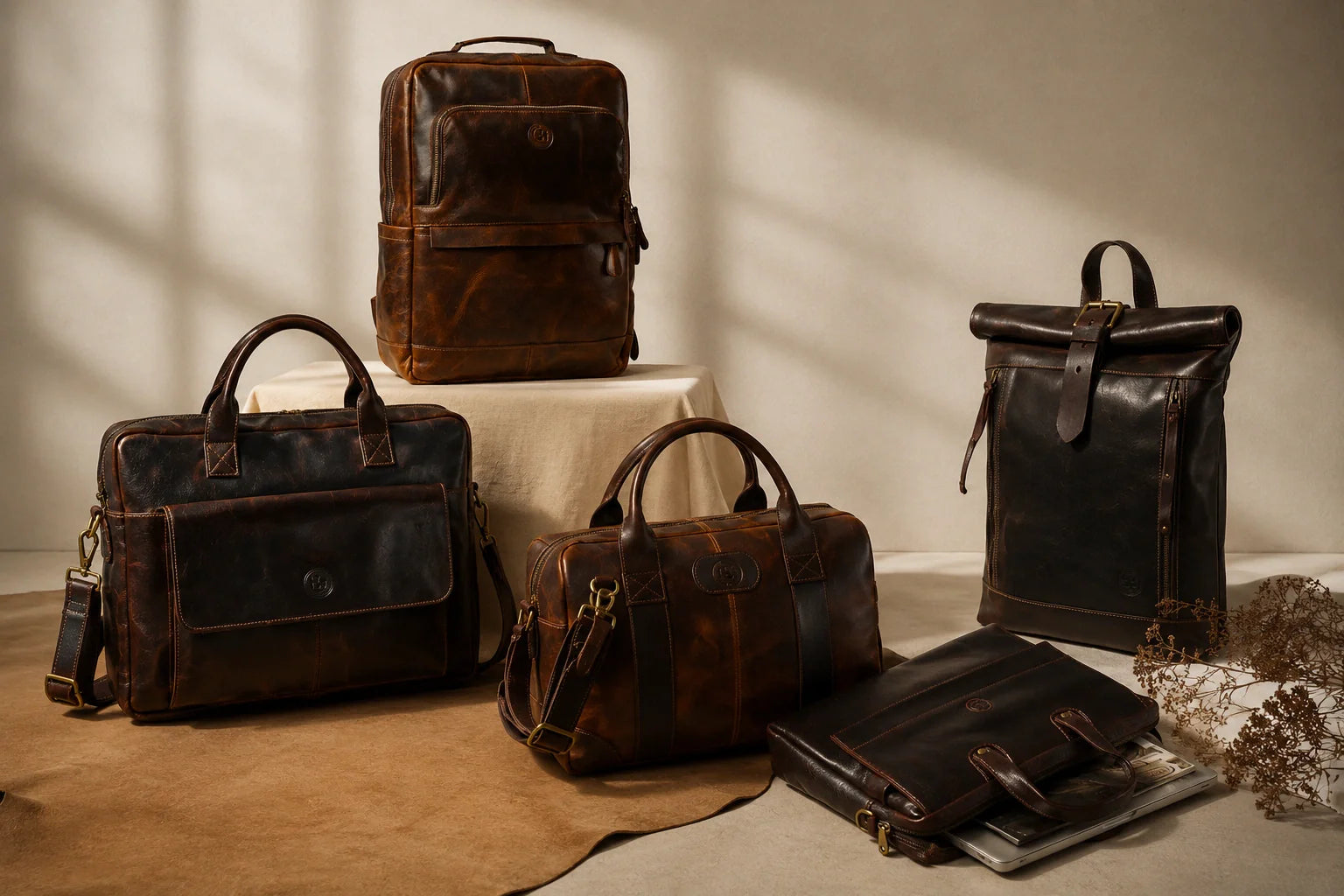
That’s why at Hestern, we rely on buffalo full-grain leather for most of our designs. It offers the right mix of durability, flexibility, and story. From a Men’s Leather Travel Backpack to a Genuine Leather Laptop Bag, it’s the kind of leather that carries personality with purpose.
If you’re curious about what makes real leather superior to synthetic substitutes, explore our blog on Leatherette vs Real Leather.
And if you’d like to see how this shift back to authentic materials is part of a bigger cultural trend, read The Return of Vintage Leather Bag.
FAQs
1. Which leather is most durable for everyday bags?
Buffalo leather easily takes the lead. It’s thicker and more elastic, handling daily stress without cracking.
2. Is yak leather waterproof?
Not entirely. It resists moisture better than cowhide but still needs conditioning to stay supple.
3. Why does camel leather fade faster?
Its fiber structure is looser, causing uneven color retention when exposed to sunlight or humidity.
4. Does buffalo leather need high maintenance?
No. A quick polish or conditioning every few months is enough to keep it looking rich.
5. Is buffalo leather eco-friendly?
Yes, because it’s usually sourced as a by-product of the meat industry, reducing waste and supporting sustainable leather production.